Social Media Planning and Content Creation: The 2026 Omnichannel Strategy
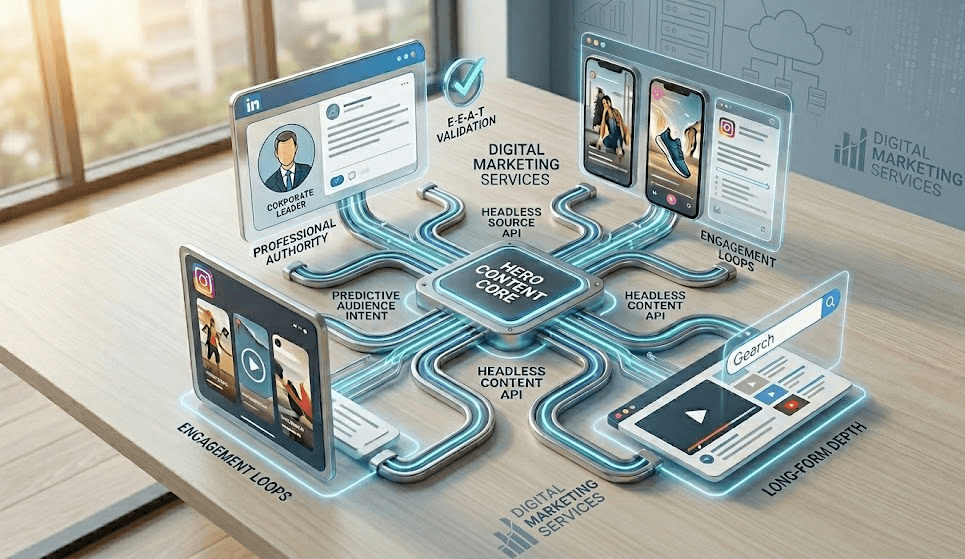
In the digital landscape of 2026, staying consistent is no longer a competitive advantage,it is the baseline for survival. The era of manual posting, generic content calendars, and vanity metrics (likes and follows) has been replaced by a sophisticated, algorithmically-aligned ecosystem.
Today, successful brands do not just do social media. They architect Social Media Planning and Content Creation systems that integrate generative AI, predictive analytics, and headless distribution to turn every post into a measurable data point in a global growth engine. If your current strategy feels like a digital megaphone, it’s time to upgrade to a precision-guided conversion loop.
The Data-Led Blueprint
The foundation of modern social media success is not creativity, it is data architecture. In 2026, we do not guess what the audience wants,we analyze their intent before a single brief is written.
1. Predictive Intent Mapping
In 2026, social media platforms (TikTok, Instagram, LinkedIn) have effectively become visual search engines. Social SEO is the primary driver of organic reach.

-
The Workflow: We use predictive analytics to identify Intent Clusters. Instead of chasing viral trends that fade in 48 hours, we map the questions your audience is asking at the Awareness stage.
-
The Goal: To ensure your brand appears as the definitive answer when a user searches for a solution within a social app. This creates a sustainable pull effect rather than the exhausted push of traditional advertising.
2. Establishing the Brand Entity for Algorithmic Trust
Algorithms now evaluate the Entity behind the account. If your content is fragmented,different fonts on Instagram, a different tone on LinkedIn,the AI lowers your Trust Score.
-
The Fix: We establish a Global Design System within Adobe Illustrator (as discussed in our Logo Design Guide). This ensures that every asset, from a 15-second Reel to a 20-page whitepaper, carries the same mathematical DNA, signaling to social algorithms that your brand is a coherent, authoritative source.
The Production Powerhouse
Scaling content is the biggest challenge for modern businesses. In 2026, we solve this through the Hero-to-Micro Repurposing Framework, utilizing AI not to replace humans, but to amplify them.
3. The Hero Asset Repurposing Model
Most brands waste 80% of their creative energy on one-off posts. We reverse this. We start with a Hero Asset,a high-value, deep-dive piece of content such as:
-
A 4,000-word Technical SEO Pillar Page.
-
A 20-minute executive interview or webinar.
-
A comprehensive 2026 Industry Report.
The Multiplier Effect: We then use AI-driven workflows to atomize that Hero Asset into:
-
5-10 Short-Form Videos: Extracting high-impact hooks for YouTube Shorts and TikTok.
-
15 LinkedIn Authority Posts: Converting data points into professional thought leadership.
-
3 Deep-Dive Carousels: Visualizing complex concepts for Instagram and Pinterest.
-
1 Interactive Newsletter: Summarizing the core value for direct-to-inbox engagement.
4. Generative AI as a Strategic Forge
In 2026, we use AI (ChatGPT-5, Claude 4, etc.) as a Strategic Forge.
-
Persona Simulation: We feed your first-party customer data into AI models to simulate how different personas (e.g., a CMO of a Tech Firm vs. a Local Small Business Owner) will react to a specific hook.
-
Dynamic Hook Testing: We generate 50 variations of a single video’s first 3 seconds. By testing these through Meta Ads, we identify the highest-retention Winner before deploying the campaign organically.
The Technical Deployment
Even the best content will fail if its distribution is clunky. We utilize Headless Infrastructure to ensure your content is delivered natively and efficiently.
5. Headless Content Distribution
Manual uploading is a bottleneck. In 2026, we utilize a Headless CMS approach for social media.
-
How it works: All approved content (the Body) is stored in a central, format-agnostic repository.
-
Automatic Formatting: Via APIs, the system automatically reformats and pushes that content to your Shopify store, your LinkedIn profile, and your mobile app simultaneously. This ensures that your Social Commerce remains perfectly in sync with your actual inventory and website data.
6. Closing the Conversion Loop
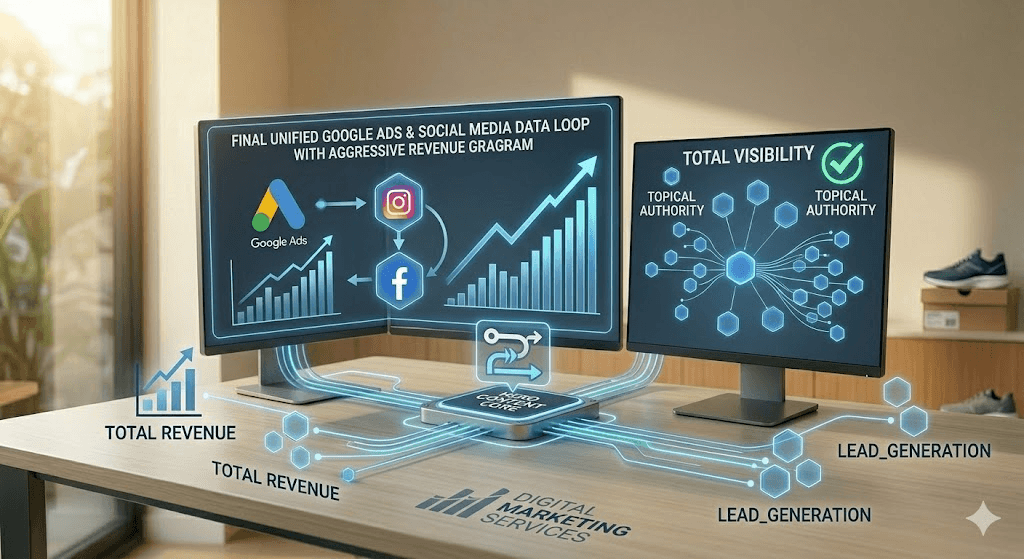
A Like does not pay the bills. In the final stage of planning, every piece of content must have a clear technical pathway to a transaction.
-
Direct Social Commerce: Integrating shoppable tags so users can buy without leaving the app.
-
Retargeting Synchronization: If a user watches 50% of your educational video, they are automatically tagged in your Google Ads funnel to receive a specific testimonial ad the next day.
-
CRM Integration: Social leads are automatically funneled into your CRM, triggering personalized email follow-ups based on the specific content they engaged with.
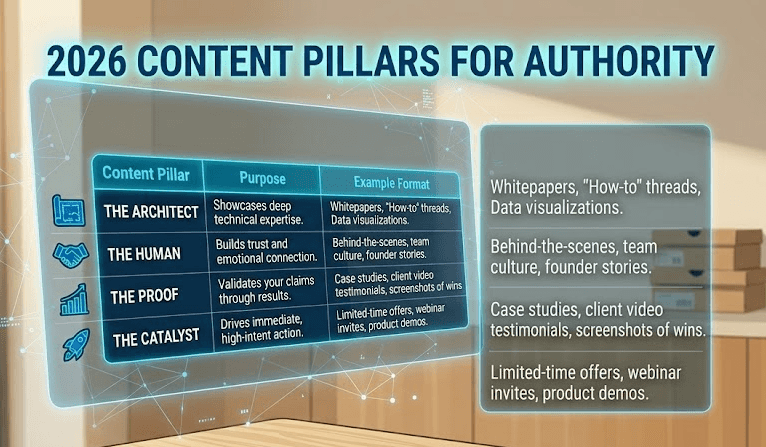
The 2026 Content Pillars for Authority
To achieve Topical Authority, your social media plan should be divided into four distinct categories of content:
Conclusion: Turning Communication into a Scalable Asset
Social Media Planning and Content Creation in 2026 is a game of technical precision. If you are still relying on feeling creative to decide what to post on Tuesday morning, you are leaving millions in potential revenue on the table.
By shifting to an intent-based, AI-enhanced, omnichannel architecture, you stop shouting into the void and start building a permanent digital infrastructure that generates leads while you sleep.
At TDM (The Digital Marketing), we do not just manage your social media. We engineer your digital presence to dominate. Our Social Media Management Services provide the high-end framework required for brands that want to lead their industry, not just participate in it.
Ready to architect your 2026 growth? Let’s get started.
Frequently Asked Questions
1. How has social media planning changed between 2023 and 2026?
In 2023, planning was about filling a calendar. In 2026, planning is about orchestrating an ecosystem.We now prioritize Social SEO, AI-driven repurposing, and automated omnichannel distribution over manual, one-off posting.
2. Can I use AI to handle all my content creation?
You can, but you should not. AI is a fantastic tool for generating drafts, resizing assets, and analyzing data. However, the Human Edge,the unique brand voice, personal anecdotes, and actual client results,is what prevents your brand from sounding like a generic bot, which is a major factor in 2026 algorithmic suppression.
3. What is Headless Content and why does it matter?
Traditional content is tied to a specific platform (like a WordPress post). Headless content is stored as raw data and sent via API to any platform. This allows you to update a piece of information once (like a price or a service feature) and have it change instantly across your website, app, and social media shop.
4. How do I balance organic reach with paid social ads?
In 2026, the two are inseparable. We use organic content as a Testing Lab.When a specific organic post shows a high Save and Share rate, we immediately put Paid Ad Spend behind it to scale that success.
5. Why is Social SEO more important than hashtags now?
Hashtags have become less effective as AI algorithms can now read the video’s content, the transcript, and the caption text. Optimizing your content for keywords (e.g., Best SEO Agency in Pakistan) is now the primary way users find you through social search bars.
6. What metrics actually matter for a business in 2026?
Forget likes. We track:
-
Save Rate: Indicates high value and bookmark worthiness.
-
Share Rate: Indicates brand advocacy and organic virality.
-
CTR to Landing Page: Measures how well the content drives intent.
-
Attributed Revenue: Tracking the social touchpoint in a user’s journey to a sale.
7. How do I keep my team efficient while managing 5+ platforms?
By using a centralized Hero Asset workflow. Instead of five different teams working in silos, one creative team builds the Hero Asset, and an automated AI-assisted pipeline handles the distribution and platform-specific formatting.
