
Important Factors to Follow for Professional Video Editing
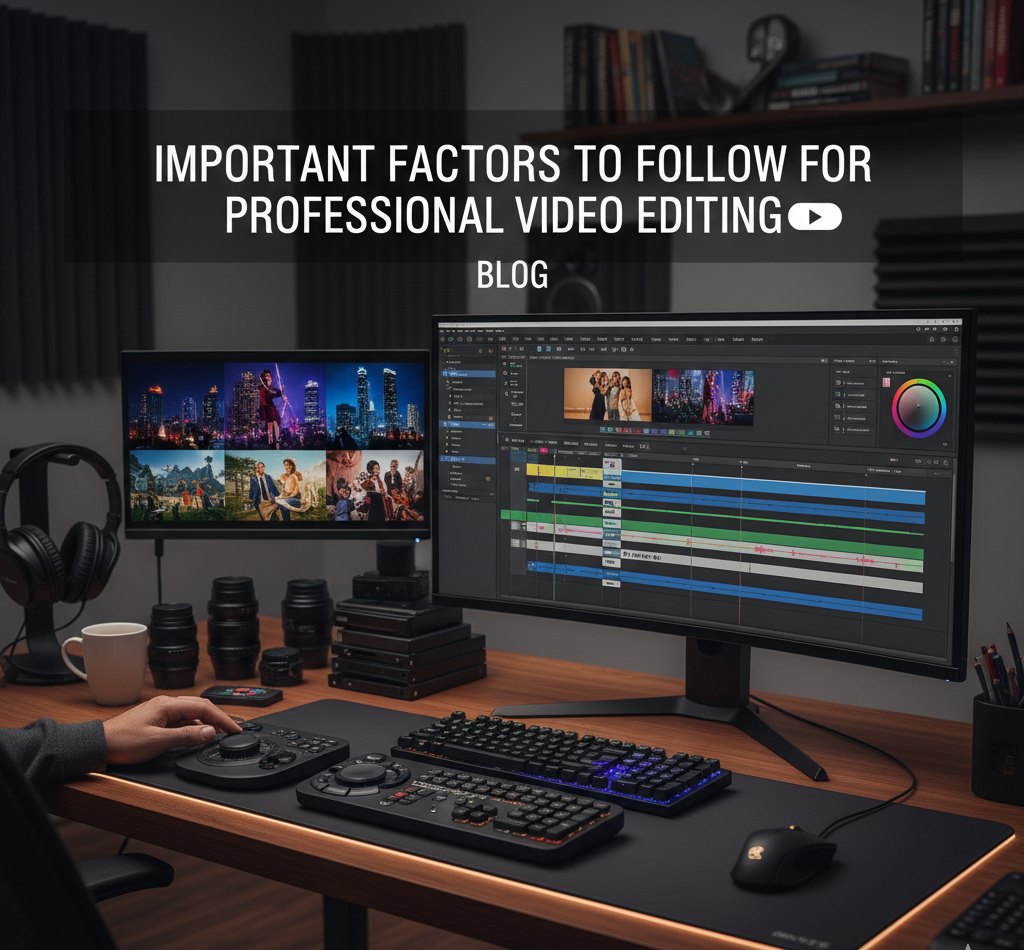
Important Factors to Follow for Professional Video Editing
Boosting your brand’s visual storytelling with high‑impact, professional edits. In today’s crowded digital marketplace, video is no longer optional; it’s essential. Whether you’re a startup launching your first brand or an established business seeking deeper engagement, high-quality video editing can be the difference between scrolling past and conversion. In this article, we’ll dive into the important factors to follow in professional video editing, equipping you with the mindset, workflow, tools, and best practices that elevate your content and support your brand growth globally.
Why Video Editing Matters More Than Ever for Brands and Business Owners
Before we dive into mechanics, let’s clarify why important factors to follow in professional video editing.
- Video is the most engaging content format on platforms from YouTube to LinkedIn to Instagram.
- We create optimized videos for social media growth that help boost engagement on platforms like Instagram, Tiktok ,YouTube, and other video platforms
- Editing isn’t just “cut and paste”‑it’s storytelling, pacing, branding, and audience psychology fused.
- With global access and remote collaboration, your business can work with editors, freelancers, or agencies across continents, and you’ll need a structured workflow and standards to ensure consistency and excellence.
- Turn your visuals into high-converting ad creatives that derive maximum clicks.
With that in mind, let’s explore the key factors that a video editor or business owner commissioning edits should follow.
1. Pre‑Production Planning & Organizing Your Footage
Why planning before you edit is critical
One of the most common mistakes is diving straight into editing without a clear structure. As noted by editors, the editing process begins before you even fire up your computer and editing software.
Key Sub-Factors to Follow in Video Editing
-
Shot list and story outline: Define what your footage needs to achieve the brand message, call‑to‑action, and style.
-
File and asset organization: Label folders clearly (for example: raw footage, b‑roll, audio, assets). Good organization speeds editing and avoids chaos.
-
Backup policy and multi‑angle rule: When filming, use multiple angles, B‑roll, and always back up your files (on local + cloud)
-
Strong video storytelling starts with cohesive visuals. Pair your edits with graphic design and branding elements that make every frame stand out.
Business‑owner angle
If you’re working with a creative team, whether internally or via your digital marketing service provider like thedigitalmarketing.services, make sure the brief includes the editing workflow, file naming convention, and version control. This avoids delays and miscommunications across time zones. 2.
Editing Workflow & Technical Fundamentals
Choosing software, understanding timelines, and workflow
Editing now happens primarily on non‑linear editing (NLE) systems, which offer flexibility and speed.
Key considerations
- Trimming and cutting: Remove anything that doesn’t advance your story. A tighter edit holds attention.
- Transitions and continuity: Use cuts, fades or wipes intentionally. Avoid over‑use of flashy transitions that distract.
- Pacing and rhythm: Fast‑paced cuts for energy, slower ones for emotion. Ensure your video matches your brand personality.
- Resolution, format and export settings: Make sure your final export suits the platform (social, website, YouTube) and that it’s high quality.
For brand startups
When you’re commissioning a video for your brand, ask the editor or agency for a workflow chart: what goes from rough cut to review to client feedback and final export. Set clear milestones (e.g., first draft in 48 hours feedback turnaround within 24 hours) especially important when working internationally.
3. Visual Style, Branding & Colour Grading
Why visual consistency builds trust
Every brand has a visual identity. When your videos carry a consistent look, title graphics, lower‑thirds, colour palette, logo placement they reinforce your brand and foster recognition.
: Practical tips
- Apply a standard colour grade or LUT (Look‑Up Table) that matches your brand aesthetic.
- Ensure logo placement and branding elements are present but not disruptive.
- Use text overlays, subtitles or captions especially relevant for global audiences who may watch without audio.
: Global‑collaboration tip
If you’re working with team members or editors in multiple countries (USA, Japan, France, etc.) create a brand style sheet for video: specifying font, colour hex codes, logo safe zones, intro/outro duration. This ensures consistency even if the editing happens remotely.
4. Audio, Sound Design & Subtitles
Good audio is more important than you think
Many viewers will abandon a video with poor sound even if the visuals are great.
: Key audio‑factors
- Dialogue clarity: Make sure speech is audible and free of background distraction.
- Background music & effects: Select tracks aligned with your brand tone; ensure music does not drown voice over.
- Subtitles & captions: Especially for global brands viewers in Japan, France, Canada may mute by default or prefer captions. Ensure text is well‑timed and legible.
: Implementation for brand owners
When you brief an editor, include your preferred audio levels, whether you require multi‑language subtitles (for international markets) and whether you need localization (e.g., French voice‑over for France, Japanese subtitles). A professional digital marketing service platform should handle this seamlessly. 5. Platform Optimization & Audience Retention
Tailoring edits for the platform and viewer behaviour
Video editing for social media or websites is not identical to long‑form editing for YouTube. Adjust your edit to fit the platform’s algorithms and audience behaviour.
: Considerations
- Hook in first 5 seconds: On social media or YouTube, you need immediate value/interest to stop the scroll.
- Aspect ratio: 16:9 for YouTube, 9:16 for reels, 1:1 for Instagram feed.
- Length: Shorter formats might require faster pacing; long‑form may allow deeper narratives.
- Call‑to‑Action (CTA): Place it at the right time, not just at the end. Encourage viewers to subscribe, book a demo, visit your website (e.g. thedigitalmarketing.services).
- Global audience factor: Time zones and localization matter ensure your content is accessible (captions, cultural cues, language) for worldwide viewers.
6. Collaboration, Workflow & Emerging Technologies
: How modern editing workflows enable global brand teams
When you’re operating globally, say you have a brand in France and marketing done in Pakistan, or a remote team in Japan you’ll need collaborative systems and standards.
: Key tools & trends
It is most important to follow important factors in professional video editing:
- Cloud‑based editing platforms: Enable editors and reviewers in different countries to work on the same timeline.
- Project management tools: Use Asana, Trello, or Monday.com to track edit status, feedback, revisions.
- AI‑assisted editing: Features like auto‑transcription, auto‑captioning, quick rough cuts are becoming mainstream.
- Remote reviews and versions: Use frame‑accurate online reviewers where clients across continents (e.g., USA & Canada) can leave timestamped comments.
- Quality assurance and final exports across languages: If you’re targeting multi‑region launches (Japan, France, Canada), your video edits may require duplicate versions with localization.
: For your agency or business owner
If you’re partnering with a digital marketing platform like TDM ask about their global edit workflow: how they handle different versions, languages, region‑specific formats, review loops. This ensures your brand stays on track globally.
7. Measuring & Iterating for Continuous Improvement
Edit once isn’t enough refine and optimize
Video editing doesn’t stop at the final cut. For brands, what matters is performance metrics and continuous improvement.
: Metrics to track
- View retention rate: Are viewers dropping off early? You may need to refine pacing or hook.
- Click‑through and conversion metrics: Does your CTA work? Is your brand message clear?
- Regional performance: Are edits performing differently in USA vs France vs Japan? Tailor versions accordingly.
- Engagement metrics: Likes, comments, shares especially relevant for social platforms.
Iteration best practice
Review metrics monthly, identify videos under performing ask: Was the edit too slow? Too long? Was the audio weak? Did the CTA miss‑fire?
A/B test: Try slightly different cuts, hooks or subtitles for different markets.
Update your Brand Video Editing Style Guide based on learnings.
Conclusion & Next Steps
Video editing is no longer just a “nice to have” for brands, it’s a strategic lever. When important Key factors are followed in professional video editing aligned to your brand, optimized for platforms, and backed by global workflow it can elevate your message, increase engagement and drive growth (both in revenue and professional respect) across markets from the USA to Japan to France to Canada and beyond.
If you’re ready to take your brand’s video content to the next level, the team at thedigitalmarketing.services can help: from pre‑production planning and editing workflow setup, through to international versioning, performance tracking and optimization. Let’s work together to craft videos that not only look amazing but perform and deliver.
