
The Importance of Backlinks in SEO: The 2026 Guide to Topical Authority

For years, digital marketers treated backlinks like a popularity contest. The formula was simple: get more links than your competitor, and you win the top spot on Google.
In 2026, that brute-force approach no longer works. Search Engine Optimization (SEO) has evolved from a game of sheer volume into a highly sophisticated system of Entity Validation and Topical Authority. Backlinks are no longer just votes, they are the connective tissue that proves your website is the definitive expert in its niche.
In this guide, we break down why the importance of backlinks in SEO has fundamentally changed, and how to structure a link-building framework that actually drives scalable organic growth.
The New Paradigm – From Votes to Validation
To understand the modern importance of backlinks, you have to understand how Google’s AI processes information. The algorithm no longer evaluates web pages in isolation. It evaluates your entire domain to determine if you are a recognized entity.
1. Validating the Hub and Spoke Architecture
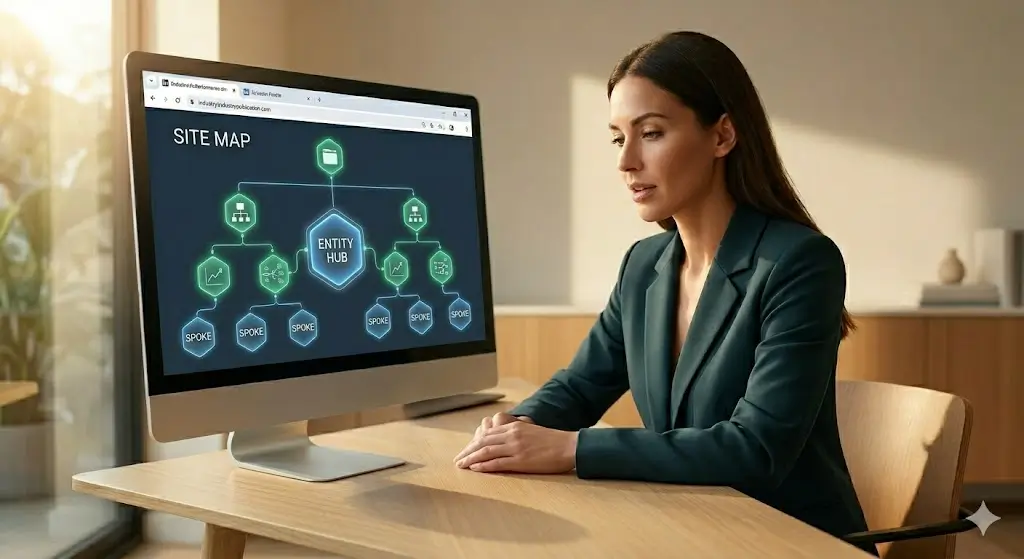
Instead of pointing links at random blog posts, the most successful 2026 SEO campaigns utilize a strict hub and spoke content model. You build massive, comprehensive pillar content (the hub) and support it with tightly interlinked sub-topics (the spokes).
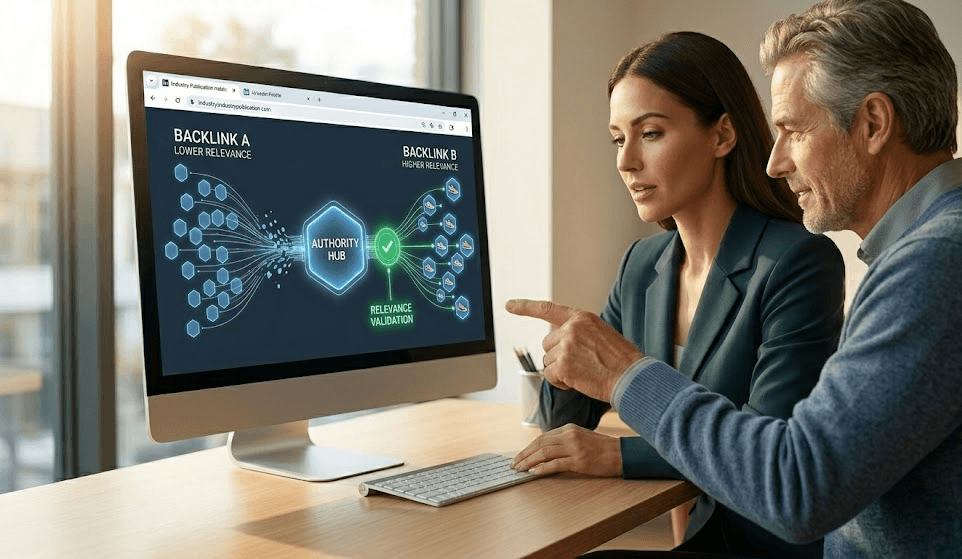
In this ecosystem, the true value of a backlink is realized when it points directly to your pillar content. The link juice (authority) flows into the hub and seamlessly distributes throughout the connected spokes, elevating the entire topical cluster simultaneously. A backlink is what proves to search engines that your specific hub is the industry standard.
2. The Shift to Relevance Over Metrics
Five years ago, SEOs obsessed over Domain Rating (DR) and Domain Authority (DA). Today, algorithmic weight is heavily skewed toward Topical Relevance. A backlink from a highly relevant, niche-specific website with a low DR is now far more valuable than a link from a massive, generalized news site that has nothing to do with your industry. Relevance is the ultimate trust signal.
Middle of the Funnel – Strategic Link Acquisition
Understanding the architecture is only half the battle. In a landscape where low-quality, spammy links can trigger algorithmic penalties, how do you acquire the right kind of validation?
3. Digital PR and Data-Led Assets
The era of spamming website owners for guest posts is dead. Today, securing high-quality backlinks requires genuine Digital PR. This means creating Linkable Assets,such as proprietary industry reports, original survey data, or deep-dive analytical studies.
When you publish unique data that other journalists and bloggers need to reference in their own writing, you earn editorial backlinks naturally. You are not asking for a link, you are providing the source material.
4. Reclaiming Unlinked Brand Mentions
As your business grows, other websites will mention your brand, your tools, or your key personnel without actually linking back to your website. Using advanced media monitoring tools to find these unlinked mentions and respectfully requesting that the author turn the text into a clickable link remains one of the highest-converting backlink strategies available.
Bottom of the Funnel – Auditing and Ecosystem Health
Your backlink profile requires constant maintenance. Just as a garden needs weeding, your SEO infrastructure requires regular auditing to ensure you are not carrying toxic weight.
5. Managing Link Velocity
Google’s spam detection AI is incredibly adept at identifying unnatural link-building patterns. If your website naturally acquires 5 backlinks a month, and suddenly acquires 500 overnight without a corresponding viral event or PR campaign, a red flag is raised. Optimizing your SEO means maintaining a natural, steady Link Velocity that mirrors genuine business growth.
6. The Disavow Protocol
Not all links are good links. Competitors may launch negative SEO attacks by pointing hundreds of spam, adult, or foreign-language links at your domain. Regular audits are mandatory to identify these toxic links. By compiling a Disavow File and submitting it to Google Search Console, you instruct the algorithm to ignore these malicious connections, protecting your hard-earned authority.

Conclusion: Securing Your Digital Footprint
The importance of backlinks in SEO cannot be overstated. They are the currency of the digital ecosystem. By transitioning away from outdated volume metrics and focusing on strategic hub validation and high-relevance digital PR, you build an impenetrable moat around your brand’s search presence.
At thedigitalmarketing.services, we specialize in engineering advanced backlink architectures that signal undeniable authority to search engines. If you are ready to stop chasing links and start building a scalable organic growth engine, explore our advanced SEO services today.
Frequently Asked Questions
1. Are backlinks still important for SEO in 2026?
Absolutely. While AI and semantic search have advanced, search engines still require external validation to determine trustworthiness. Backlinks act as independent third-party verification that your content is accurate and authoritative.
2. How many backlinks do I need to rank on the first page?
There is no magic number. Ranking depends entirely on the competitiveness of the specific keyword and the topical authority of the competing pages. A page with 5 highly relevant links from industry leaders will outrank a page with 500 low-quality directory links.
3. What is the difference between a Dofollow and a Nofollow link?
A Dofollow link passes authority and SEO value from the linking site to your site. A Nofollow link contains an HTML tag instructing search engines not to pass authority. While Dofollow links are the primary goal, a healthy backlink profile contains a natural mix of both.
4. Can I just buy backlinks to speed up the process?
Buying links violates Google’s Spam Policies. While black hat networks still exist, Google’s AI detection updates actively de-index sites participating in link schemes. The short-term gain is never worth the long-term penalty of having your domain removed from search results.
5. How long does it take for a backlink to impact my rankings?
SEO is a long-term investment. Once a backlink goes live, it typically takes anywhere from 4 to 10 weeks for search engine crawlers to discover the link, index it, and recalculate your page’s authority score.
6. Do internal links count as backlinks?
No. Internal links connect pages within your own domain, while backlinks come from external domains. However, internal links are critical for distributing the authority you gain from backlinks throughout your site’s architecture.
7. How do I know if a backlink is High Quality?
A high-quality backlink comes from a site that has strict editorial standards, generates its own genuine organic traffic, and is topically relevant to your specific niche. If anyone can get a link on the site by filling out a form, it is likely low quality.
